
Youth Pitching Velocity Development Isn't the Enemy of Command — It's the Engine
Throwing harder and throwing strikes are not competing goals. Train velocity the right way and command follows it. That's not a theory — that's what happens when kids move better, sequence better, and stop babying the ball to the plate.
I've watched this play out over and over. A pitcher comes in timid, aiming the ball, spinning it up there at 55% effort because somebody told them "just throw strikes." Their mechanics are a mess because there's no intent driving the pattern. We build their velocity the right way — with real arm care, progressive loading, and sound mechanics — and suddenly their command improves too. Because now they're actually pitching.
Here's what you need to understand about youth pitching velocity development before your kid throws another bullpen.
Why Velocity Gets a Bad Reputation With Youth Players
Parents hear "velocity training" and immediately picture a 10-year-old max-effort long-tossing into a net until their elbow gives out. That's not velocity development. That's abuse. And it's the reason the word "velocity" makes some youth coaches flinch.
Real velocity development is built on a foundation. You don't touch load until the infrastructure is in place. That means:
- A pre-throw arm care routine before every single session — not optional, not "when we have time"
- A post-throw cooldown that actually addresses what you just put the arm through
- Progressive loading that starts conservative and earns its way up over weeks, not days
- Intent-based throwing — meaning the athlete is training to move explosively, not just lobbing a heavier ball around
- Volume that matches what the arm can recover from — not what the coach wants to see on a radar gun today
When those pieces are in place, velocity training is one of the safest, most productive things a young pitcher can do. When those pieces aren't in place, it doesn't matter if you're throwing a 4-oz ball or a 7-oz ball. You're gambling with a kid's arm.
The prescription — exact loads, rep counts, intensities — that belongs in the hands of a qualified coach who can assess the individual athlete. What I'm giving you here is the principle and the why. The protocol gets built around your kid specifically.
What Actually Happens to Command When Velocity Goes Up
Here's the piece that surprises parents most. When a pitcher develops real velocity through better mechanics and intent, their command doesn't fall apart. It gets sharper.
Why? Because loose, low-intent mechanics are wildly inconsistent. There's no repeatable pattern when a kid is just "trying to throw strikes." The body does something slightly different every rep. When you train explosive intent and anchor it to sound mechanical sequencing — hip-to-shoulder separation, direction to the plate, consistent arm path — now the body has something to repeat. And repeatability is command.
Aiming the ball is not a command strategy. It's a coping mechanism for bad mechanics. Fix the mechanics, build the intent, and the command comes with it.mThe Weighted Ball Conversation Parents Need to Have
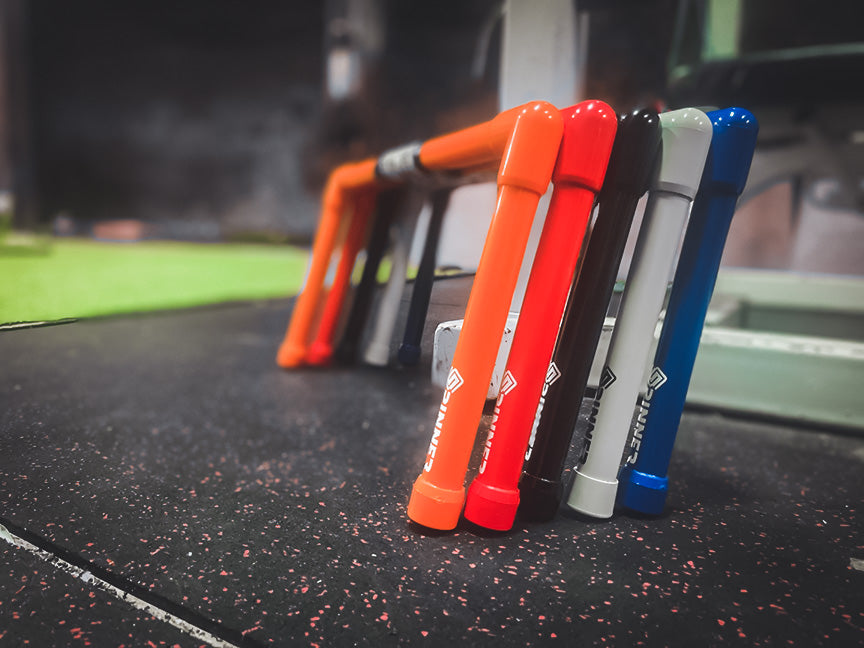
Weighted balls are a tool. They are not magic and they are not dangerous on their own — misuse is dangerous. There's a reason we use them carefully and progressively at the academy, and there's a reason I don't hand a parent a protocol sheet and say "go do this at home."
The principles are straightforward:
- Progressive load — you start closer to game weight and earn your way to heavier implements over time
- Purposeful intent on every rep — you are training a movement pattern, not just accumulating throws
- No max-effort volume abuse — more throws with heavier balls is not better; it's a fast track to an injury
- Always inside an arm care system — weighted work without pre/post care is like lifting heavy with no warmup, every single day
Used correctly under a qualified eye, weighted implements accelerate velocity development and reinforce the mechanical patterns that produce command. Used incorrectly, they become the thing that ends a kid's season in April.
Radar Is a Tool, Not the Goal
I use radar constantly. What gets measured gets managed. A pitcher who never sees their velocity has no feedback loop — they're just throwing into the dark hoping something changes. That's not training, that's practice with no direction.
But the gun doesn't run the session. I've seen kids chase the radar and destroy everything good in their delivery trying to spike one number on one pitch. That's backwards. You build the pattern. You build the intent. You build the body. The radar tells you if it's working — it doesn't tell you how to make it work.
Same goes for high school kids and their travel ball coaches obsessing over radar at showcases. Velocity matters for exposure, no question. But if you're max-effort showcasing on a body that hasn't done the development work, you're either going to get hurt or you're going to plateau early and wonder why everybody else passed you.
This Applies to Softball Too
Everything I just said about baseball pitchers goes directly to fastpitch. Arm velocity matters. Hip drive matters. Intent matters. The pitchers who sit at the back of the pack on speed are not getting bailed out by spin — not at the levels that matter. You train mechanics, speed, and accuracy together. That's the system.
A softball pitcher who throws 48 mph with decent spin is interesting. A softball pitcher who throws 58 mph with decent spin is a problem for hitters. Velocity buys you margin for error on every other part of your game. That's true at 12U and it's true in college.
The Bottom Line
Youth pitching velocity development done right is not reckless. It's structured, progressive, and built inside an arm care system that protects the athlete at every step. It doesn't trade command for speed — it builds the mechanical foundation that produces both. Your kid doesn't have to choose between throwing hard and throwing strikes. Those two things grow together when the training is right.
If you want to talk through what that looks like for your pitcher — baseball or softball, whatever level they're at — reach out. We'll take a look at where they are and build from there the right way.